
October 18, 2026 · debt · saving · budgeting
How to Balance Paying Off Debt and Saving Money
You do not always have to choose between debt payments and savings. Build a practical order of priorities that protects cash while reducing expensive balances.
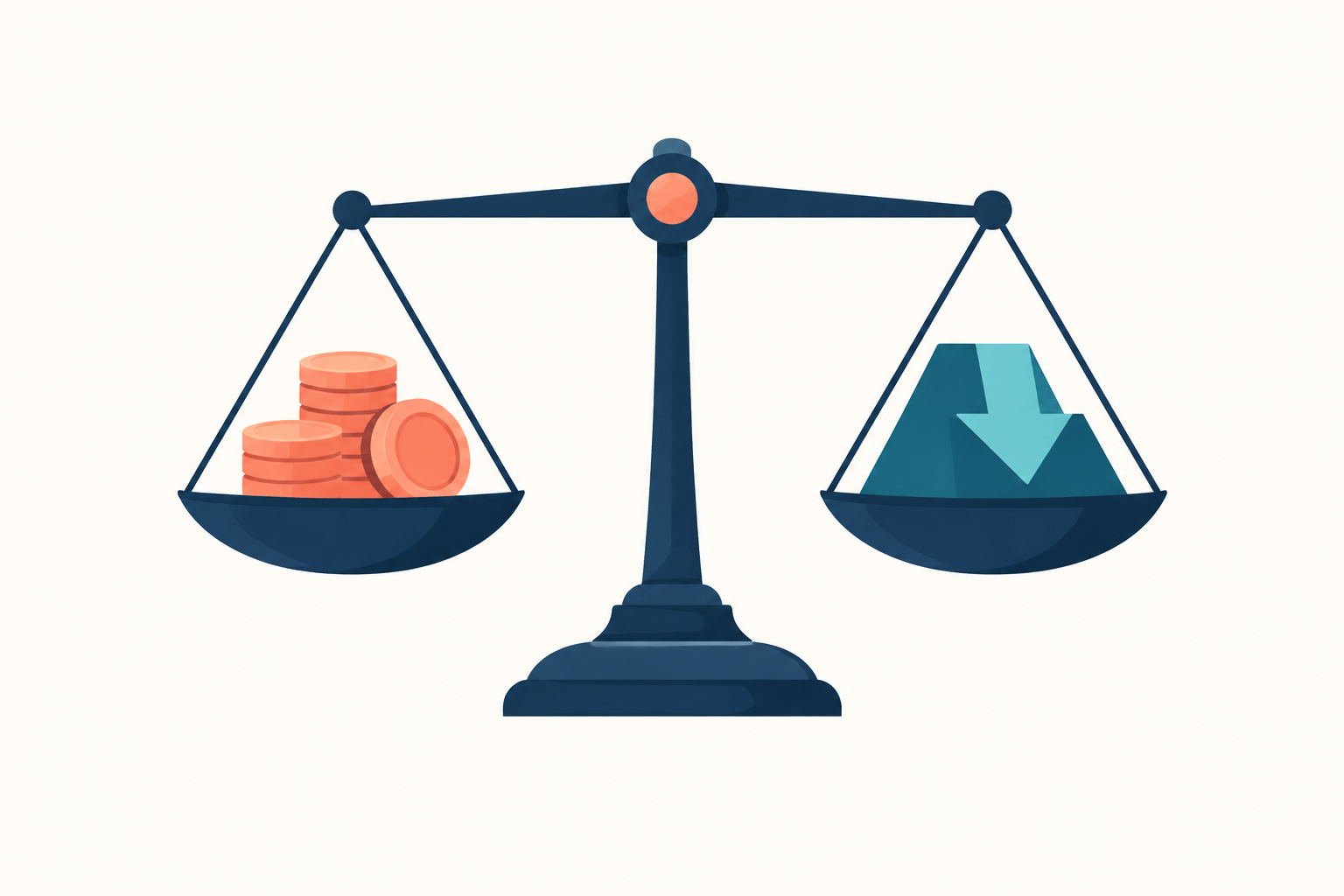
When you owe money, saving can feel irresponsible. When you send every spare dollar to debt, having no savings can feel frightening. Both reactions make sense: interest is expensive, and life does not stop producing unexpected bills while you repay it.
A workable plan usually assigns different jobs to your money instead of choosing one goal forever. Required payments keep accounts current, a cash buffer protects stability, and extra payments reduce future interest.
Start with essentials and required payments
Cover housing, food, utilities, essential transportation, insurance, and required debt payments before dividing extra money between goals. If those basics exceed income, optimizing savings percentages is not the first problem to solve.
Contact lenders early if you cannot make required payments. Ask about hardship options and their effect on interest, account status, and future payments. Consider qualified nonprofit credit counseling when unsecured debts are unmanageable.
Do not skip minimums on one account just to make a large extra payment elsewhere. That can create fees and credit damage that undermine the plan.
Define what your savings are for
Not all savings serve the same purpose. Separate these categories:
- Emergency savings for genuinely unexpected disruptions
- Sinking funds for predictable irregular costs
- Near-term goals, such as a necessary move
- Long-term investing, such as retirement
A $600 annual insurance bill is not a surprise if you know it is coming. Saving $50 monthly for it protects your checking account without pretending it is discretionary wealth.
This distinction helps you avoid sending money to debt today and borrowing again for a known bill next month.
Build an initial buffer
A starter emergency fund can keep a small repair or medical expense from becoming new revolving debt. An initial goal might be $500 or $1,000, depending on your circumstances.
If your job is unstable, you support dependents, or your insurance deductible is high, you may need more protection before making aggressive extra payments. If income is stable and expensive debt is growing, a smaller initial cushion may be reasonable.
The CFPB's emergency fund guide explains how a dedicated reserve can help absorb financial shocks. Keep this money accessible and separate from everyday spending.
Compare debt rates with savings returns
Suppose you owe $5,000 on a credit card at 24% APR. A rough month's interest is $100: $5,000 times 0.24 divided by 12.
Suppose an insured savings account earns 4% annually. Keeping $1,000 there earns approximately $40 over a year before taxes, assuming the rate and balance remain steady. Using $1,000 to reduce the card balance avoids roughly $240 in annual interest if that reduction would otherwise persist for the year.
That comparison strongly favors paying expensive debt once adequate short-term protection exists. However, paying the card sacrifices accessible cash. If a crisis forces you to borrow again, the decision becomes less straightforward.
Understand what an extra payment accomplishes
With a fixed $5,000 balance at 24% APR, no new charges, and a simplified monthly interest model, paying $150 monthly takes about 56 months. Total interest is roughly $3,300.
At $250 monthly, payoff takes about 26 months and interest falls to roughly $1,450. Actual credit card interest is usually calculated daily, so exact figures vary.
An extra $100 monthly can make a substantial difference. But setting a payment you can repeat is more effective than sending $500 once and needing to borrow $400 back for groceries.
Use a staged allocation plan
Consider a household with $400 monthly available after essentials, minimums, and known irregular expenses. One possible sequence is:
- Stage one: save $250 and pay $150 extra toward expensive debt.
- Stage two: after building the chosen starter reserve, save $50 and pay $350 extra.
- Stage three: after clearing high-rate debt, redirect the old payment toward a larger emergency fund and other goals.
At $250 monthly, a $1,000 starter fund takes four months if you begin at zero. The numbers can change, but the stage transition should be explicit so temporary caution doesn't become permanent underpayment.
Consider employer retirement matching separately
If your employer offers a retirement match, review the plan terms before pausing all contributions. A match can be valuable, but eligibility, vesting, contribution requirements, and your immediate financial stability matter.
Money in a retirement account is not a replacement for emergency cash. Withdrawals may involve taxes, penalties, restrictions, or long-term opportunity costs.
If you cannot cover food or required bills, seek individualized help rather than blindly following a retirement rule. If basics are secure, contributing enough to capture an available match may belong in your priority order.
Treat lower-rate debt differently
A 4% fixed-rate loan does not create the same urgency as a 29% credit card. With lower-rate debt, it may make sense to maintain payments while expanding reserves or funding important goals.
Still, don't assume investing will reliably outperform your loan rate over a short period. Investment returns fluctuate; required debt payments do not. Consider time horizon, risk tolerance, taxes, and liquidity before making that tradeoff.
Debt repayment can also reduce stress. That benefit is real, but it should be weighed alongside the protection cash provides.
Review monthly instead of constantly changing direction
Choose a monthly allocation and automate it when your account balance supports the withdrawals. Review after a significant income change, emergency, or debt payoff.
SpeakCents can help track daily purchases so you can identify sustainable extra money without cutting every enjoyable expense. A $40 reduction in unused subscriptions is more repeatable than an unrealistic grocery target.
Conclusion
Keep required payments current, protect a starter cushion, and direct most extra money toward expensive debt. Pick a specific savings target and a repeatable monthly split this week. As balances fall and reserves grow, update the plan rather than treating debt and saving as permanent rivals.
Try SpeakCents on your own money
Track spending by voice, keep budgets honest, and see where your money goes.
Get started free