
October 18, 2026 · money habits · saving · debt
The Difference Between Being Rich and Being Financially Stable
A high income is not the same as financial security. Learn how cash flow, reserves and manageable obligations create real stability.
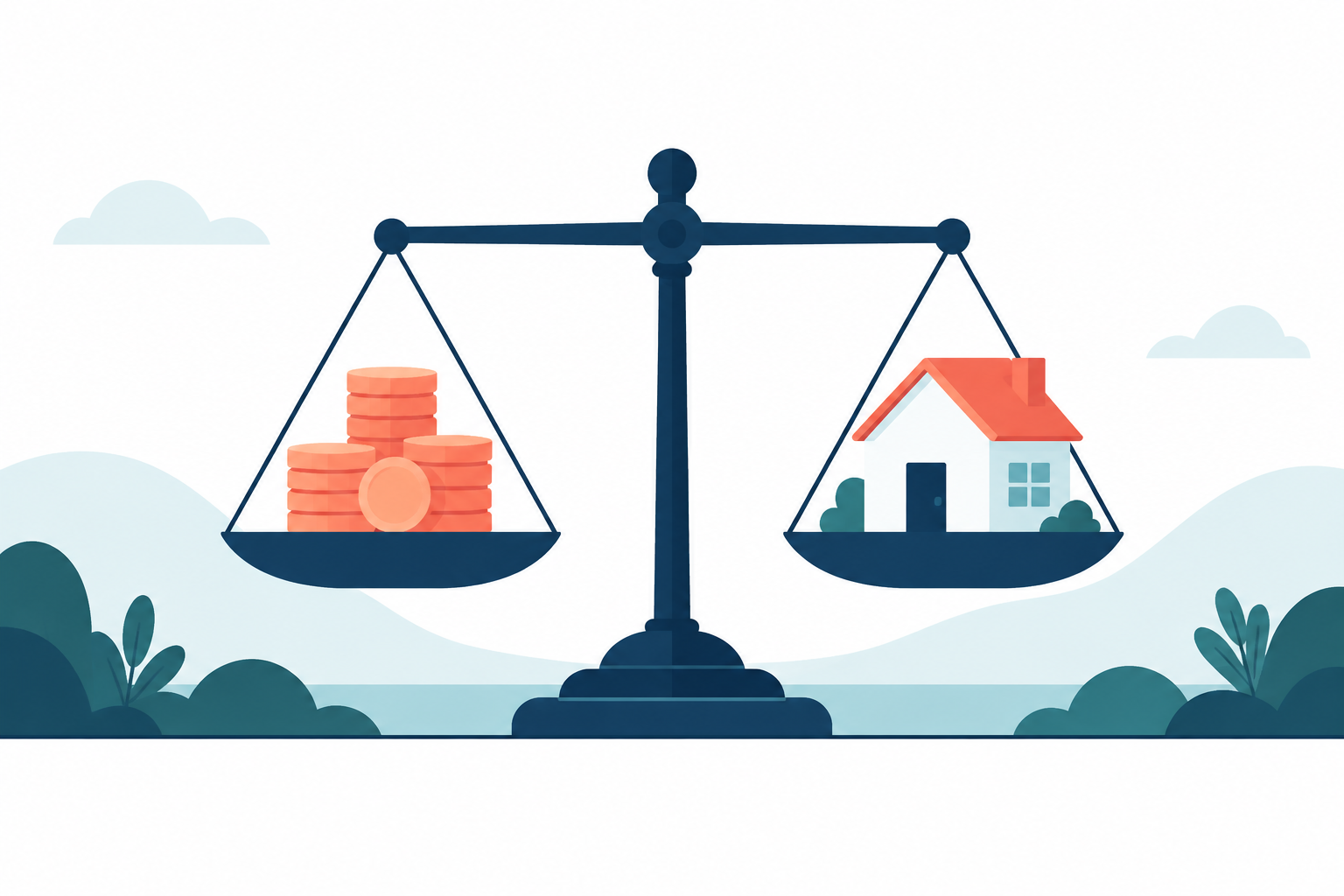
Someone can drive an expensive car, earn an impressive salary and still dread the next payday. Another person can earn far less and feel relatively secure. The difference often lies in obligations, reserves and how much room exists between income and spending.
Being rich and being financially stable can overlap, but they describe different things. Understanding the distinction helps you choose goals that improve daily life rather than merely change appearances.
Define the Terms Before Comparing Them
Rich has no universal dollar threshold. People use it to mean high income, substantial assets, expensive possessions or a lifestyle above their own. Those meanings are not interchangeable.
Financial stability is more practical. It means you can generally meet obligations, handle ordinary disruptions and make progress without repeatedly relying on expensive borrowing.
Stability does not guarantee protection from every crisis. A prolonged illness or job loss can overwhelm even careful planning. It does, however, reduce vulnerability to smaller setbacks.
Income Is a Flow, Wealth Is a Stock
Income is money received during a period. Wealth, often measured as net worth, is assets minus liabilities at a point in time.
Consider two simplified examples:
- Taylor owns $90,000 in assets and owes $75,000. Net worth is $15,000.
- Morgan owns $55,000 in assets and owes $10,000. Net worth is $45,000.
Taylor may appear wealthier if the assets include a more expensive car. Morgan has the higher net worth. Neither figure alone tells us how easily either person can pay next month's rent.
Liquidity matters too. A retirement account or home may add to wealth without providing readily accessible cash for groceries.
Compare Two Monthly Budgets
Imagine Taylor takes home $8,000 monthly but spends:
- $3,200 on housing and utilities
- $1,100 on transportation
- $900 on debt payments
- $2,500 on food, shopping and other costs
That leaves $300. With only $600 in accessible savings, a $1,200 repair creates an immediate problem.
Morgan takes home $3,800 and spends $3,200, leaving $600. Morgan also has $6,000 in savings and no revolving card balance. Despite lower income, Morgan has more monthly margin and a larger cash cushion.
These are illustrations, not judgments. Housing markets, health costs and family responsibilities can limit anyone's choices.
Stability Depends on Margin
Margin is the gap between reliable resources and required spending. A larger gap gives you options: save, repay debt, handle price increases or take time to compare job offers.
If your take-home income is $3,000 and spending is $2,950, your margin is $50. Cutting a $10 subscription helps, but it will not solve a $500 structural housing shortfall. Recognize when the problem requires larger changes or additional support.
Possible levers include benefits eligibility, higher-paid work, shared housing, transportation changes or negotiating bills. Not every lever is available immediately.
Reserves Matter More Than Appearances
Emergency savings protect you from turning each disruption into debt. Start with an amount connected to a likely problem, such as a $400 repair, rather than feeling defeated by a distant target.
Then work toward a month of essential costs and, over time, a larger cushion appropriate to your household. A single-income family or variable-income worker may need more protection than a household with two reliable salaries.
The CFPB's emergency savings guide explains how a dedicated reserve can help manage unexpected expenses.
Manageable Debt Creates Breathing Room
A large income can conceal an equally large payment burden. Look beyond whether a lender approves a purchase. Ask what its payment would prevent you from doing.
A $650 vehicle payment plus $180 for insurance and $170 for fuel consumes $1,000 monthly before maintenance. On $4,000 take-home pay, that is one-quarter of income. The payment may be approved but still leave too little room for your priorities.
High-interest debt also compounds the problem. An outstanding $4,000 card balance at 24% APR initially costs roughly $80 monthly in interest, assuming a simple monthly approximation.
Stability Includes Freedom to Choose
The CFPB describes financial well-being in terms that include meeting obligations, absorbing shocks and having freedom to enjoy life. Its financial well-being resources offer a broader perspective than salary alone.
A stable household may be able to decline overtime occasionally, replace worn shoes without borrowing or take a modest trip after saving. These choices may look unremarkable, but they reflect real security.
That doesn't mean every purchase must be optimized. A sustainable plan includes enjoyment within available resources.
Measure What Actually Helps
Instead of comparing your lifestyle with someone else's, review a few indicators:
- Are essential bills current?
- Is monthly spending below reliable take-home income?
- How many weeks of essentials could accessible savings cover?
- Are costly debt balances decreasing?
- Are predictable expenses being funded in advance?
Tracking purchases can reveal whether your spending supports these measures. SpeakCents can help make recording expenses a small daily habit rather than a complicated end-of-month task.
Build Stability Before Chasing Status
Choose one practical improvement: save the next $100, reduce one recurring obligation or stop adding to a card balance. Then review progress monthly.
You can pursue higher income and greater wealth while strengthening stability. Just avoid treating visible spending as proof of either. The most useful financial goal is not looking rich; it is having enough room to meet your needs and make deliberate choices.
Try SpeakCents on your own money
Track spending by voice, keep budgets honest, and see where your money goes.
Get started free